2026
General Dentistry is AGD's peer-reviewed journal. Published bimonthly, General Dentistry presents research and clinical findings to support the full range of procedures that general dentists perform on a regular basis.
2025
2024
2023
2022
2021
2020
2019
2018
2017
September/October 2024
Table of Contents
Departments
-
Editorial Go, slow, or stop: obeying the signs
Timothy F. KosinskiFull Article (PDF)
2024 September/October; 72(5):5.
-
Pharmacology Managing anticoagulant medications around dentistry
Mark DonaldsonFull Article (PDF)
Jason H. Goodchild
2024 September/October; 72(5):6-9.
-
Oral Diagnosis Ragged bony destruction and Expansile mass of mixed density
Galal OmamiFull Article (PDF)
2024 September/October; 72(5):78,80.
-
Self-Instruction Answers Exercises No. GD515, GD516, and GD517 from the September/October 2023 issue
2024 September/October; 72(5):79.Full Article (PDF)
Clinical Articles
-
SELF-INSTRUCTION
Endodontics Nonsurgical management of large periapical lesions: case reports and review of the literature
Shubham TripathiFull Article (PDF)
Pallav Patni
Pradeep Jain
Swadhin Raghuwanshi
Sanket Hans Pandey
This article presents 2 clinical cases and a review of the literature concerning nonsurgical endodontic treatment of large periapical lesions. In both cases, the lesions were successfully treated with root canal treatment, antimicrobial medications, and mineral trioxide aggregate sealing. The success rates for this treatment are reported to be as high as 94%.
2024 September/October; 72(5):10-18.
Self-Instruction Exercise No. GD533 -
SELF-INSTRUCTION
Periodontics Treatment of deep gingival recession in homologous molars using a modified laterally positioned flap and subepithelial connective tissue graft: a case report
Maria Caroline Rios PiechaFull Article (PDF)
Rodrigo Könsgen Rossales
Tiago Schlindvein de Araujo
Thiago Marchi Martins
The modified laterally positioned flap technique was used in combination with a subepithelial connective tissue graft for root coverage of homologous mandibular molars with deep gingival recession. Follow-up examinations 1 year after the procedures revealed satisfactory root coverage, tissue gain, and an absence of postoperative gingival recession at the flap donor sites.
2024 September/October; 72(5):20-25.
Self-Instruction Exercise No. GD534 -
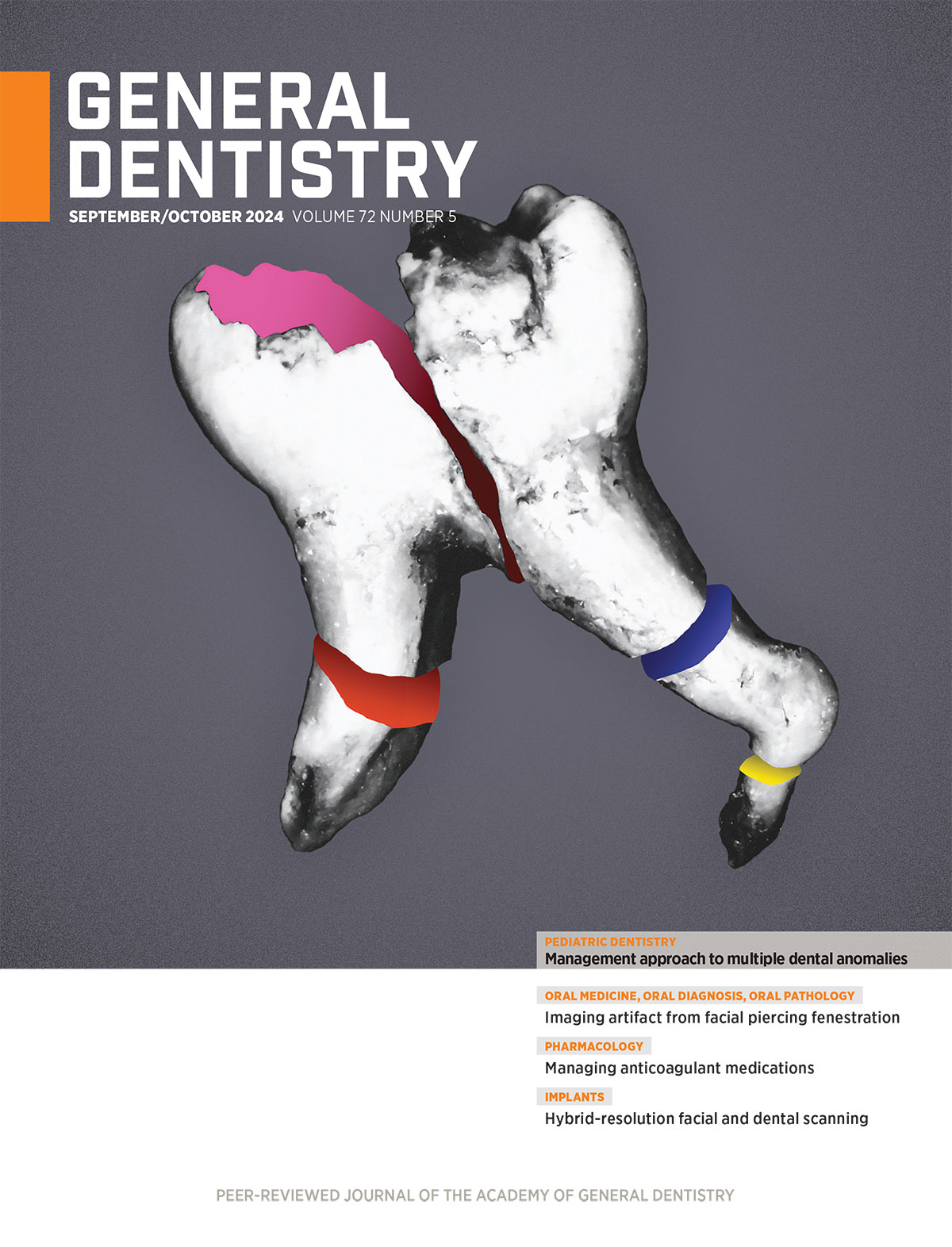
Pediatric Dentistry Multidisciplinary approach to multiple dental anomalies in pediatric patients: a case report with 4-year follow-up
Florense Gabriela da SilvaFull Article (PDF)
Priscila Hernández de Campos
Mayara Rangel
Cássio José Fornazari Alencar
Tatiane Fernandes Novaes
Michele Baffi Diniz
Renata Oliveira Guaré
This article describes the multidisciplinary treatment and follow-up of a 5-year-old boy with a supernumerary microdont in the mandibular posterior, an odontoma in the maxillary anterior, and severe dentoalveolar ankylosis of the primary mandibular right second molar. Early diagnosis and a combination of pediatric surgery and orthodontic approaches provided a successful outcome.
2024 September/October; 72(5):27-30.
-
Implants Hybrid-resolution facial and dental scanning: a cost-effective approach to utilizing 3D facial data in anterior dental implant restoration
Adam P. TowFull Article (PDF)
The author proposes a method for combining low-cost, lower resolution facial scanning and standard high-resolution intraoral scanning into a fully digital representation of the teeth and face. The data from a free smartphone application for 3D scanning are meshed with data from a traditional intraoral scanner to incorporate all necessary information without the cost of additional scanning equipment.
2024 September/October; 72(5):31-37.
-
SELF-INSTRUCTION
Basic Science Effect of mouthwashes on the color stability of a nanohybrid composite resin
Giovanna Pinto Wallace da SilvaFull Article (PDF)
Vitória Uchôa Mesquita
Danielson Guedes Pontes
The effect of different mouthwashes on the color stability of a nanohybrid composite resin was assessed in vitro. The color change for all mouthwash groups was negligible after 30 days, but all experimental groups differed significantly from the control group after 90 days, and the specimens showed a clinically unacceptable level of color change.
2024 September/October; 72(5):38-41.
Self-Instruction Exercise No. GD535 -
Implants A new guide for enhancing dental implant placement: an in vitro assessment of accuracy
Heliasadat HaeriboroojeniFull Article (PDF)
Reza Amid
Anahita Moscowchi
Mahdi Kadkhodazadeh
Aida Kheiri
A new surgical guide was designed to control the mesiodistal distance between implant osteotomies and adjacent teeth as well as the osteotomy depth. To assess its accuracy, the guide was used to prepare implant osteotomies in partially edentulous models, and the actual osteotomy dimensions were compared to the predicted values. The guide had high accuracy in achieving linear interosteotomy mesiodistal distances and osteotomy depths.
2024 September/October; 72(5):43-48.
-
Basic Science Influence of radiant exposure and material shade on the degree of conversion and microhardness of a resin-based composite
Rafael da Silva BeolchiFull Article (PDF)
Taís Scaramucci
Sandra Ribeiro Cunha
Milena Traversa Palazon
Roberto Ruggiero Braga
Carlos Alberto Kenji Shimokawa
This study assessed the influence of radiant exposure and material shade on the degree of conversion (DC), microhardness (Knoop hardness number [KHN]), and top to bottom surface hardness ratio of a resin-based composite. Increased radiant exposure levels led to increased DC and KHN values for both shades. Shade did not affect DC, but the bottom surface of the darker shade showed lower KHN values at each radiant exposure level.
2024 September/October; 72(5):49-53.
-
Restorative Dentistry Restoration with a posterior CAD/CAM onlay after failure of a direct resin-based composite restoration: a case report
Guilherme Anziliero ArossiFull Article (PDF)
Raj Patel
Adam Eisner
Mary Anne S. Melo
This case report describes the replacement of a failing direct resin-based composite restoration with an indirect lithium disilicate onlay fabricated and placed in a single appointment via a CAD/CAM workflow. The technique used was efficient, minimally invasive, and showed good results at the 4-month follow-up examination.
2024 September/October; 72(5):54-59.
-
Orthodontics The use of miniplates for nontraditional orthodontic treatment: clinical considerations for referring general dentists
Lina SharabFull Article (PDF)
Katie Jo Hunt
Joseph Van Sickels
Judson Knight
George Jeryn Jacob
Mandibular third molar extraction procedures present the opportunity to place miniplates for anchorage of distalizing appliances, avoiding the need for orthognathic surgery or premolar extractions. This article describes 3 cases in which miniplates were placed during the removal of impacted third molars, offering the patients less invasive, nontraditional treatment options for molar distalization.
2024 September/October; 72(5):60-65.
-
Oral Medicine, Oral Diagnosis, Oral Pathology Severe radiographic artifact created by a large fenestration of the skin and labial mucosa following placement of a plate piercing: a case report
John K. BrooksFull Article (PDF)
Proma Ahmed
Azin Parsa
Jeffery B. Price
The objective of this article is to describe a previously unreported radiographic anomaly produced by a large oral piercing site below the lower lip. The radiolucency was ultimately attributed to an extensive aperture created by a series of sequentially larger soft tissue expanders.
2024 September/October; 72(5):66-69.
-
Oral Medicine, Oral Diagnosis, Oral Pathology Practical management recommendations for incidental otolaryngologic findings on cone beam computed tomography
Yoni SacknovitzFull Article (PDF)
Michael Ghiam
King Chong Chan
Jonathan B. Overdevest
This literature review provides a comprehensive summary of incidental findings on CBCT and an algorithm for determining the acuity of referral requirements for different findings. The results are grouped into 4 anatomical areas, and each area has been subdivided into diagnoses and their common imaging findings to facilitate appropriate clinical management.
2024 September/October; 72(5):70-77.
2016
September/October 2024
Table of Contents
Departments
-
Editorial Go, slow, or stop: obeying the signs
Timothy F. KosinskiFull Article (PDF)
2024 September/October; 72(5):5.
-
Pharmacology Managing anticoagulant medications around dentistry
Mark DonaldsonFull Article (PDF)
Jason H. Goodchild
2024 September/October; 72(5):6-9.
-
Oral Diagnosis Ragged bony destruction and Expansile mass of mixed density
Galal OmamiFull Article (PDF)
2024 September/October; 72(5):78,80.
-
Self-Instruction Answers Exercises No. GD515, GD516, and GD517 from the September/October 2023 issue
2024 September/October; 72(5):79.Full Article (PDF)
Clinical Articles
-
SELF-INSTRUCTION
Endodontics Nonsurgical management of large periapical lesions: case reports and review of the literature
Shubham TripathiFull Article (PDF)
Pallav Patni
Pradeep Jain
Swadhin Raghuwanshi
Sanket Hans Pandey
This article presents 2 clinical cases and a review of the literature concerning nonsurgical endodontic treatment of large periapical lesions. In both cases, the lesions were successfully treated with root canal treatment, antimicrobial medications, and mineral trioxide aggregate sealing. The success rates for this treatment are reported to be as high as 94%.
2024 September/October; 72(5):10-18.
Self-Instruction Exercise No. GD533 -
SELF-INSTRUCTION
Periodontics Treatment of deep gingival recession in homologous molars using a modified laterally positioned flap and subepithelial connective tissue graft: a case report
Maria Caroline Rios PiechaFull Article (PDF)
Rodrigo Könsgen Rossales
Tiago Schlindvein de Araujo
Thiago Marchi Martins
The modified laterally positioned flap technique was used in combination with a subepithelial connective tissue graft for root coverage of homologous mandibular molars with deep gingival recession. Follow-up examinations 1 year after the procedures revealed satisfactory root coverage, tissue gain, and an absence of postoperative gingival recession at the flap donor sites.
2024 September/October; 72(5):20-25.
Self-Instruction Exercise No. GD534 -
Pediatric Dentistry Multidisciplinary approach to multiple dental anomalies in pediatric patients: a case report with 4-year follow-up
Florense Gabriela da SilvaFull Article (PDF)
Priscila Hernández de Campos
Mayara Rangel
Cássio José Fornazari Alencar
Tatiane Fernandes Novaes
Michele Baffi Diniz
Renata Oliveira Guaré
This article describes the multidisciplinary treatment and follow-up of a 5-year-old boy with a supernumerary microdont in the mandibular posterior, an odontoma in the maxillary anterior, and severe dentoalveolar ankylosis of the primary mandibular right second molar. Early diagnosis and a combination of pediatric surgery and orthodontic approaches provided a successful outcome.
2024 September/October; 72(5):27-30.
-
Implants Hybrid-resolution facial and dental scanning: a cost-effective approach to utilizing 3D facial data in anterior dental implant restoration
Adam P. TowFull Article (PDF)
The author proposes a method for combining low-cost, lower resolution facial scanning and standard high-resolution intraoral scanning into a fully digital representation of the teeth and face. The data from a free smartphone application for 3D scanning are meshed with data from a traditional intraoral scanner to incorporate all necessary information without the cost of additional scanning equipment.
2024 September/October; 72(5):31-37.
-
SELF-INSTRUCTION
Basic Science Effect of mouthwashes on the color stability of a nanohybrid composite resin
Giovanna Pinto Wallace da SilvaFull Article (PDF)
Vitória Uchôa Mesquita
Danielson Guedes Pontes
The effect of different mouthwashes on the color stability of a nanohybrid composite resin was assessed in vitro. The color change for all mouthwash groups was negligible after 30 days, but all experimental groups differed significantly from the control group after 90 days, and the specimens showed a clinically unacceptable level of color change.
2024 September/October; 72(5):38-41.
Self-Instruction Exercise No. GD535 -
Implants A new guide for enhancing dental implant placement: an in vitro assessment of accuracy
Heliasadat HaeriboroojeniFull Article (PDF)
Reza Amid
Anahita Moscowchi
Mahdi Kadkhodazadeh
Aida Kheiri
A new surgical guide was designed to control the mesiodistal distance between implant osteotomies and adjacent teeth as well as the osteotomy depth. To assess its accuracy, the guide was used to prepare implant osteotomies in partially edentulous models, and the actual osteotomy dimensions were compared to the predicted values. The guide had high accuracy in achieving linear interosteotomy mesiodistal distances and osteotomy depths.
2024 September/October; 72(5):43-48.
-
Basic Science Influence of radiant exposure and material shade on the degree of conversion and microhardness of a resin-based composite
Rafael da Silva BeolchiFull Article (PDF)
Taís Scaramucci
Sandra Ribeiro Cunha
Milena Traversa Palazon
Roberto Ruggiero Braga
Carlos Alberto Kenji Shimokawa
This study assessed the influence of radiant exposure and material shade on the degree of conversion (DC), microhardness (Knoop hardness number [KHN]), and top to bottom surface hardness ratio of a resin-based composite. Increased radiant exposure levels led to increased DC and KHN values for both shades. Shade did not affect DC, but the bottom surface of the darker shade showed lower KHN values at each radiant exposure level.
2024 September/October; 72(5):49-53.
-
Restorative Dentistry Restoration with a posterior CAD/CAM onlay after failure of a direct resin-based composite restoration: a case report
Guilherme Anziliero ArossiFull Article (PDF)
Raj Patel
Adam Eisner
Mary Anne S. Melo
This case report describes the replacement of a failing direct resin-based composite restoration with an indirect lithium disilicate onlay fabricated and placed in a single appointment via a CAD/CAM workflow. The technique used was efficient, minimally invasive, and showed good results at the 4-month follow-up examination.
2024 September/October; 72(5):54-59.
-
Orthodontics The use of miniplates for nontraditional orthodontic treatment: clinical considerations for referring general dentists
Lina SharabFull Article (PDF)
Katie Jo Hunt
Joseph Van Sickels
Judson Knight
George Jeryn Jacob
Mandibular third molar extraction procedures present the opportunity to place miniplates for anchorage of distalizing appliances, avoiding the need for orthognathic surgery or premolar extractions. This article describes 3 cases in which miniplates were placed during the removal of impacted third molars, offering the patients less invasive, nontraditional treatment options for molar distalization.
2024 September/October; 72(5):60-65.
-
Oral Medicine, Oral Diagnosis, Oral Pathology Severe radiographic artifact created by a large fenestration of the skin and labial mucosa following placement of a plate piercing: a case report
John K. BrooksFull Article (PDF)
Proma Ahmed
Azin Parsa
Jeffery B. Price
The objective of this article is to describe a previously unreported radiographic anomaly produced by a large oral piercing site below the lower lip. The radiolucency was ultimately attributed to an extensive aperture created by a series of sequentially larger soft tissue expanders.
2024 September/October; 72(5):66-69.
-
Oral Medicine, Oral Diagnosis, Oral Pathology Practical management recommendations for incidental otolaryngologic findings on cone beam computed tomography
Yoni SacknovitzFull Article (PDF)
Michael Ghiam
King Chong Chan
Jonathan B. Overdevest
This literature review provides a comprehensive summary of incidental findings on CBCT and an algorithm for determining the acuity of referral requirements for different findings. The results are grouped into 4 anatomical areas, and each area has been subdivided into diagnoses and their common imaging findings to facilitate appropriate clinical management.
2024 September/October; 72(5):70-77.
2015
September/October 2024
Table of Contents
Departments
-
Editorial Go, slow, or stop: obeying the signs
Timothy F. KosinskiFull Article (PDF)
2024 September/October; 72(5):5.
-
Pharmacology Managing anticoagulant medications around dentistry
Mark DonaldsonFull Article (PDF)
Jason H. Goodchild
2024 September/October; 72(5):6-9.
-
Oral Diagnosis Ragged bony destruction and Expansile mass of mixed density
Galal OmamiFull Article (PDF)
2024 September/October; 72(5):78,80.
-
Self-Instruction Answers Exercises No. GD515, GD516, and GD517 from the September/October 2023 issue
2024 September/October; 72(5):79.Full Article (PDF)
Clinical Articles
-
SELF-INSTRUCTION
Endodontics Nonsurgical management of large periapical lesions: case reports and review of the literature
Shubham TripathiFull Article (PDF)
Pallav Patni
Pradeep Jain
Swadhin Raghuwanshi
Sanket Hans Pandey
This article presents 2 clinical cases and a review of the literature concerning nonsurgical endodontic treatment of large periapical lesions. In both cases, the lesions were successfully treated with root canal treatment, antimicrobial medications, and mineral trioxide aggregate sealing. The success rates for this treatment are reported to be as high as 94%.
2024 September/October; 72(5):10-18.
Self-Instruction Exercise No. GD533 -
SELF-INSTRUCTION
Periodontics Treatment of deep gingival recession in homologous molars using a modified laterally positioned flap and subepithelial connective tissue graft: a case report
Maria Caroline Rios PiechaFull Article (PDF)
Rodrigo Könsgen Rossales
Tiago Schlindvein de Araujo
Thiago Marchi Martins
The modified laterally positioned flap technique was used in combination with a subepithelial connective tissue graft for root coverage of homologous mandibular molars with deep gingival recession. Follow-up examinations 1 year after the procedures revealed satisfactory root coverage, tissue gain, and an absence of postoperative gingival recession at the flap donor sites.
2024 September/October; 72(5):20-25.
Self-Instruction Exercise No. GD534 -
Pediatric Dentistry Multidisciplinary approach to multiple dental anomalies in pediatric patients: a case report with 4-year follow-up
Florense Gabriela da SilvaFull Article (PDF)
Priscila Hernández de Campos
Mayara Rangel
Cássio José Fornazari Alencar
Tatiane Fernandes Novaes
Michele Baffi Diniz
Renata Oliveira Guaré
This article describes the multidisciplinary treatment and follow-up of a 5-year-old boy with a supernumerary microdont in the mandibular posterior, an odontoma in the maxillary anterior, and severe dentoalveolar ankylosis of the primary mandibular right second molar. Early diagnosis and a combination of pediatric surgery and orthodontic approaches provided a successful outcome.
2024 September/October; 72(5):27-30.
-
Implants Hybrid-resolution facial and dental scanning: a cost-effective approach to utilizing 3D facial data in anterior dental implant restoration
Adam P. TowFull Article (PDF)
The author proposes a method for combining low-cost, lower resolution facial scanning and standard high-resolution intraoral scanning into a fully digital representation of the teeth and face. The data from a free smartphone application for 3D scanning are meshed with data from a traditional intraoral scanner to incorporate all necessary information without the cost of additional scanning equipment.
2024 September/October; 72(5):31-37.
-
SELF-INSTRUCTION
Basic Science Effect of mouthwashes on the color stability of a nanohybrid composite resin
Giovanna Pinto Wallace da SilvaFull Article (PDF)
Vitória Uchôa Mesquita
Danielson Guedes Pontes
The effect of different mouthwashes on the color stability of a nanohybrid composite resin was assessed in vitro. The color change for all mouthwash groups was negligible after 30 days, but all experimental groups differed significantly from the control group after 90 days, and the specimens showed a clinically unacceptable level of color change.
2024 September/October; 72(5):38-41.
Self-Instruction Exercise No. GD535 -
Implants A new guide for enhancing dental implant placement: an in vitro assessment of accuracy
Heliasadat HaeriboroojeniFull Article (PDF)
Reza Amid
Anahita Moscowchi
Mahdi Kadkhodazadeh
Aida Kheiri
A new surgical guide was designed to control the mesiodistal distance between implant osteotomies and adjacent teeth as well as the osteotomy depth. To assess its accuracy, the guide was used to prepare implant osteotomies in partially edentulous models, and the actual osteotomy dimensions were compared to the predicted values. The guide had high accuracy in achieving linear interosteotomy mesiodistal distances and osteotomy depths.
2024 September/October; 72(5):43-48.
-
Basic Science Influence of radiant exposure and material shade on the degree of conversion and microhardness of a resin-based composite
Rafael da Silva BeolchiFull Article (PDF)
Taís Scaramucci
Sandra Ribeiro Cunha
Milena Traversa Palazon
Roberto Ruggiero Braga
Carlos Alberto Kenji Shimokawa
This study assessed the influence of radiant exposure and material shade on the degree of conversion (DC), microhardness (Knoop hardness number [KHN]), and top to bottom surface hardness ratio of a resin-based composite. Increased radiant exposure levels led to increased DC and KHN values for both shades. Shade did not affect DC, but the bottom surface of the darker shade showed lower KHN values at each radiant exposure level.
2024 September/October; 72(5):49-53.
-
Restorative Dentistry Restoration with a posterior CAD/CAM onlay after failure of a direct resin-based composite restoration: a case report
Guilherme Anziliero ArossiFull Article (PDF)
Raj Patel
Adam Eisner
Mary Anne S. Melo
This case report describes the replacement of a failing direct resin-based composite restoration with an indirect lithium disilicate onlay fabricated and placed in a single appointment via a CAD/CAM workflow. The technique used was efficient, minimally invasive, and showed good results at the 4-month follow-up examination.
2024 September/October; 72(5):54-59.
-
Orthodontics The use of miniplates for nontraditional orthodontic treatment: clinical considerations for referring general dentists
Lina SharabFull Article (PDF)
Katie Jo Hunt
Joseph Van Sickels
Judson Knight
George Jeryn Jacob
Mandibular third molar extraction procedures present the opportunity to place miniplates for anchorage of distalizing appliances, avoiding the need for orthognathic surgery or premolar extractions. This article describes 3 cases in which miniplates were placed during the removal of impacted third molars, offering the patients less invasive, nontraditional treatment options for molar distalization.
2024 September/October; 72(5):60-65.
-
Oral Medicine, Oral Diagnosis, Oral Pathology Severe radiographic artifact created by a large fenestration of the skin and labial mucosa following placement of a plate piercing: a case report
John K. BrooksFull Article (PDF)
Proma Ahmed
Azin Parsa
Jeffery B. Price
The objective of this article is to describe a previously unreported radiographic anomaly produced by a large oral piercing site below the lower lip. The radiolucency was ultimately attributed to an extensive aperture created by a series of sequentially larger soft tissue expanders.
2024 September/October; 72(5):66-69.
-
Oral Medicine, Oral Diagnosis, Oral Pathology Practical management recommendations for incidental otolaryngologic findings on cone beam computed tomography
Yoni SacknovitzFull Article (PDF)
Michael Ghiam
King Chong Chan
Jonathan B. Overdevest
This literature review provides a comprehensive summary of incidental findings on CBCT and an algorithm for determining the acuity of referral requirements for different findings. The results are grouped into 4 anatomical areas, and each area has been subdivided into diagnoses and their common imaging findings to facilitate appropriate clinical management.
2024 September/October; 72(5):70-77.
2014
September/October 2024
Table of Contents
Departments
-
Editorial Go, slow, or stop: obeying the signs
Timothy F. KosinskiFull Article (PDF)
2024 September/October; 72(5):5.
-
Pharmacology Managing anticoagulant medications around dentistry
Mark DonaldsonFull Article (PDF)
Jason H. Goodchild
2024 September/October; 72(5):6-9.
-
Oral Diagnosis Ragged bony destruction and Expansile mass of mixed density
Galal OmamiFull Article (PDF)
2024 September/October; 72(5):78,80.
-
Self-Instruction Answers Exercises No. GD515, GD516, and GD517 from the September/October 2023 issue
2024 September/October; 72(5):79.Full Article (PDF)
Clinical Articles
-
SELF-INSTRUCTION
Endodontics Nonsurgical management of large periapical lesions: case reports and review of the literature
Shubham TripathiFull Article (PDF)
Pallav Patni
Pradeep Jain
Swadhin Raghuwanshi
Sanket Hans Pandey
This article presents 2 clinical cases and a review of the literature concerning nonsurgical endodontic treatment of large periapical lesions. In both cases, the lesions were successfully treated with root canal treatment, antimicrobial medications, and mineral trioxide aggregate sealing. The success rates for this treatment are reported to be as high as 94%.
2024 September/October; 72(5):10-18.
Self-Instruction Exercise No. GD533 -
SELF-INSTRUCTION
Periodontics Treatment of deep gingival recession in homologous molars using a modified laterally positioned flap and subepithelial connective tissue graft: a case report
Maria Caroline Rios PiechaFull Article (PDF)
Rodrigo Könsgen Rossales
Tiago Schlindvein de Araujo
Thiago Marchi Martins
The modified laterally positioned flap technique was used in combination with a subepithelial connective tissue graft for root coverage of homologous mandibular molars with deep gingival recession. Follow-up examinations 1 year after the procedures revealed satisfactory root coverage, tissue gain, and an absence of postoperative gingival recession at the flap donor sites.
2024 September/October; 72(5):20-25.
Self-Instruction Exercise No. GD534 -
Pediatric Dentistry Multidisciplinary approach to multiple dental anomalies in pediatric patients: a case report with 4-year follow-up
Florense Gabriela da SilvaFull Article (PDF)
Priscila Hernández de Campos
Mayara Rangel
Cássio José Fornazari Alencar
Tatiane Fernandes Novaes
Michele Baffi Diniz
Renata Oliveira Guaré
This article describes the multidisciplinary treatment and follow-up of a 5-year-old boy with a supernumerary microdont in the mandibular posterior, an odontoma in the maxillary anterior, and severe dentoalveolar ankylosis of the primary mandibular right second molar. Early diagnosis and a combination of pediatric surgery and orthodontic approaches provided a successful outcome.
2024 September/October; 72(5):27-30.
-
Implants Hybrid-resolution facial and dental scanning: a cost-effective approach to utilizing 3D facial data in anterior dental implant restoration
Adam P. TowFull Article (PDF)
The author proposes a method for combining low-cost, lower resolution facial scanning and standard high-resolution intraoral scanning into a fully digital representation of the teeth and face. The data from a free smartphone application for 3D scanning are meshed with data from a traditional intraoral scanner to incorporate all necessary information without the cost of additional scanning equipment.
2024 September/October; 72(5):31-37.
-
SELF-INSTRUCTION
Basic Science Effect of mouthwashes on the color stability of a nanohybrid composite resin
Giovanna Pinto Wallace da SilvaFull Article (PDF)
Vitória Uchôa Mesquita
Danielson Guedes Pontes
The effect of different mouthwashes on the color stability of a nanohybrid composite resin was assessed in vitro. The color change for all mouthwash groups was negligible after 30 days, but all experimental groups differed significantly from the control group after 90 days, and the specimens showed a clinically unacceptable level of color change.
2024 September/October; 72(5):38-41.
Self-Instruction Exercise No. GD535 -
Implants A new guide for enhancing dental implant placement: an in vitro assessment of accuracy
Heliasadat HaeriboroojeniFull Article (PDF)
Reza Amid
Anahita Moscowchi
Mahdi Kadkhodazadeh
Aida Kheiri
A new surgical guide was designed to control the mesiodistal distance between implant osteotomies and adjacent teeth as well as the osteotomy depth. To assess its accuracy, the guide was used to prepare implant osteotomies in partially edentulous models, and the actual osteotomy dimensions were compared to the predicted values. The guide had high accuracy in achieving linear interosteotomy mesiodistal distances and osteotomy depths.
2024 September/October; 72(5):43-48.
-
Basic Science Influence of radiant exposure and material shade on the degree of conversion and microhardness of a resin-based composite
Rafael da Silva BeolchiFull Article (PDF)
Taís Scaramucci
Sandra Ribeiro Cunha
Milena Traversa Palazon
Roberto Ruggiero Braga
Carlos Alberto Kenji Shimokawa
This study assessed the influence of radiant exposure and material shade on the degree of conversion (DC), microhardness (Knoop hardness number [KHN]), and top to bottom surface hardness ratio of a resin-based composite. Increased radiant exposure levels led to increased DC and KHN values for both shades. Shade did not affect DC, but the bottom surface of the darker shade showed lower KHN values at each radiant exposure level.
2024 September/October; 72(5):49-53.
-
Restorative Dentistry Restoration with a posterior CAD/CAM onlay after failure of a direct resin-based composite restoration: a case report
Guilherme Anziliero ArossiFull Article (PDF)
Raj Patel
Adam Eisner
Mary Anne S. Melo
This case report describes the replacement of a failing direct resin-based composite restoration with an indirect lithium disilicate onlay fabricated and placed in a single appointment via a CAD/CAM workflow. The technique used was efficient, minimally invasive, and showed good results at the 4-month follow-up examination.
2024 September/October; 72(5):54-59.
-
Orthodontics The use of miniplates for nontraditional orthodontic treatment: clinical considerations for referring general dentists
Lina SharabFull Article (PDF)
Katie Jo Hunt
Joseph Van Sickels
Judson Knight
George Jeryn Jacob
Mandibular third molar extraction procedures present the opportunity to place miniplates for anchorage of distalizing appliances, avoiding the need for orthognathic surgery or premolar extractions. This article describes 3 cases in which miniplates were placed during the removal of impacted third molars, offering the patients less invasive, nontraditional treatment options for molar distalization.
2024 September/October; 72(5):60-65.
-
Oral Medicine, Oral Diagnosis, Oral Pathology Severe radiographic artifact created by a large fenestration of the skin and labial mucosa following placement of a plate piercing: a case report
John K. BrooksFull Article (PDF)
Proma Ahmed
Azin Parsa
Jeffery B. Price
The objective of this article is to describe a previously unreported radiographic anomaly produced by a large oral piercing site below the lower lip. The radiolucency was ultimately attributed to an extensive aperture created by a series of sequentially larger soft tissue expanders.
2024 September/October; 72(5):66-69.
-
Oral Medicine, Oral Diagnosis, Oral Pathology Practical management recommendations for incidental otolaryngologic findings on cone beam computed tomography
Yoni SacknovitzFull Article (PDF)
Michael Ghiam
King Chong Chan
Jonathan B. Overdevest
This literature review provides a comprehensive summary of incidental findings on CBCT and an algorithm for determining the acuity of referral requirements for different findings. The results are grouped into 4 anatomical areas, and each area has been subdivided into diagnoses and their common imaging findings to facilitate appropriate clinical management.
2024 September/October; 72(5):70-77.
2013
September/October 2024
Table of Contents
Departments
-
Editorial Go, slow, or stop: obeying the signs
Timothy F. KosinskiFull Article (PDF)
2024 September/October; 72(5):5.
-
Pharmacology Managing anticoagulant medications around dentistry
Mark DonaldsonFull Article (PDF)
Jason H. Goodchild
2024 September/October; 72(5):6-9.
-
Oral Diagnosis Ragged bony destruction and Expansile mass of mixed density
Galal OmamiFull Article (PDF)
2024 September/October; 72(5):78,80.
-
Self-Instruction Answers Exercises No. GD515, GD516, and GD517 from the September/October 2023 issue
2024 September/October; 72(5):79.Full Article (PDF)
Clinical Articles
-
SELF-INSTRUCTION
Endodontics Nonsurgical management of large periapical lesions: case reports and review of the literature
Shubham TripathiFull Article (PDF)
Pallav Patni
Pradeep Jain
Swadhin Raghuwanshi
Sanket Hans Pandey
This article presents 2 clinical cases and a review of the literature concerning nonsurgical endodontic treatment of large periapical lesions. In both cases, the lesions were successfully treated with root canal treatment, antimicrobial medications, and mineral trioxide aggregate sealing. The success rates for this treatment are reported to be as high as 94%.
2024 September/October; 72(5):10-18.
Self-Instruction Exercise No. GD533 -
SELF-INSTRUCTION
Periodontics Treatment of deep gingival recession in homologous molars using a modified laterally positioned flap and subepithelial connective tissue graft: a case report
Maria Caroline Rios PiechaFull Article (PDF)
Rodrigo Könsgen Rossales
Tiago Schlindvein de Araujo
Thiago Marchi Martins
The modified laterally positioned flap technique was used in combination with a subepithelial connective tissue graft for root coverage of homologous mandibular molars with deep gingival recession. Follow-up examinations 1 year after the procedures revealed satisfactory root coverage, tissue gain, and an absence of postoperative gingival recession at the flap donor sites.
2024 September/October; 72(5):20-25.
Self-Instruction Exercise No. GD534 -
Pediatric Dentistry Multidisciplinary approach to multiple dental anomalies in pediatric patients: a case report with 4-year follow-up
Florense Gabriela da SilvaFull Article (PDF)
Priscila Hernández de Campos
Mayara Rangel
Cássio José Fornazari Alencar
Tatiane Fernandes Novaes
Michele Baffi Diniz
Renata Oliveira Guaré
This article describes the multidisciplinary treatment and follow-up of a 5-year-old boy with a supernumerary microdont in the mandibular posterior, an odontoma in the maxillary anterior, and severe dentoalveolar ankylosis of the primary mandibular right second molar. Early diagnosis and a combination of pediatric surgery and orthodontic approaches provided a successful outcome.
2024 September/October; 72(5):27-30.
-
Implants Hybrid-resolution facial and dental scanning: a cost-effective approach to utilizing 3D facial data in anterior dental implant restoration
Adam P. TowFull Article (PDF)
The author proposes a method for combining low-cost, lower resolution facial scanning and standard high-resolution intraoral scanning into a fully digital representation of the teeth and face. The data from a free smartphone application for 3D scanning are meshed with data from a traditional intraoral scanner to incorporate all necessary information without the cost of additional scanning equipment.
2024 September/October; 72(5):31-37.
-
SELF-INSTRUCTION
Basic Science Effect of mouthwashes on the color stability of a nanohybrid composite resin
Giovanna Pinto Wallace da SilvaFull Article (PDF)
Vitória Uchôa Mesquita
Danielson Guedes Pontes
The effect of different mouthwashes on the color stability of a nanohybrid composite resin was assessed in vitro. The color change for all mouthwash groups was negligible after 30 days, but all experimental groups differed significantly from the control group after 90 days, and the specimens showed a clinically unacceptable level of color change.
2024 September/October; 72(5):38-41.
Self-Instruction Exercise No. GD535 -
Implants A new guide for enhancing dental implant placement: an in vitro assessment of accuracy
Heliasadat HaeriboroojeniFull Article (PDF)
Reza Amid
Anahita Moscowchi
Mahdi Kadkhodazadeh
Aida Kheiri
A new surgical guide was designed to control the mesiodistal distance between implant osteotomies and adjacent teeth as well as the osteotomy depth. To assess its accuracy, the guide was used to prepare implant osteotomies in partially edentulous models, and the actual osteotomy dimensions were compared to the predicted values. The guide had high accuracy in achieving linear interosteotomy mesiodistal distances and osteotomy depths.
2024 September/October; 72(5):43-48.
-
Basic Science Influence of radiant exposure and material shade on the degree of conversion and microhardness of a resin-based composite
Rafael da Silva BeolchiFull Article (PDF)
Taís Scaramucci
Sandra Ribeiro Cunha
Milena Traversa Palazon
Roberto Ruggiero Braga
Carlos Alberto Kenji Shimokawa
This study assessed the influence of radiant exposure and material shade on the degree of conversion (DC), microhardness (Knoop hardness number [KHN]), and top to bottom surface hardness ratio of a resin-based composite. Increased radiant exposure levels led to increased DC and KHN values for both shades. Shade did not affect DC, but the bottom surface of the darker shade showed lower KHN values at each radiant exposure level.
2024 September/October; 72(5):49-53.
-
Restorative Dentistry Restoration with a posterior CAD/CAM onlay after failure of a direct resin-based composite restoration: a case report
Guilherme Anziliero ArossiFull Article (PDF)
Raj Patel
Adam Eisner
Mary Anne S. Melo
This case report describes the replacement of a failing direct resin-based composite restoration with an indirect lithium disilicate onlay fabricated and placed in a single appointment via a CAD/CAM workflow. The technique used was efficient, minimally invasive, and showed good results at the 4-month follow-up examination.
2024 September/October; 72(5):54-59.
-
Orthodontics The use of miniplates for nontraditional orthodontic treatment: clinical considerations for referring general dentists
Lina SharabFull Article (PDF)
Katie Jo Hunt
Joseph Van Sickels
Judson Knight
George Jeryn Jacob
Mandibular third molar extraction procedures present the opportunity to place miniplates for anchorage of distalizing appliances, avoiding the need for orthognathic surgery or premolar extractions. This article describes 3 cases in which miniplates were placed during the removal of impacted third molars, offering the patients less invasive, nontraditional treatment options for molar distalization.
2024 September/October; 72(5):60-65.
-
Oral Medicine, Oral Diagnosis, Oral Pathology Severe radiographic artifact created by a large fenestration of the skin and labial mucosa following placement of a plate piercing: a case report
John K. BrooksFull Article (PDF)
Proma Ahmed
Azin Parsa
Jeffery B. Price
The objective of this article is to describe a previously unreported radiographic anomaly produced by a large oral piercing site below the lower lip. The radiolucency was ultimately attributed to an extensive aperture created by a series of sequentially larger soft tissue expanders.
2024 September/October; 72(5):66-69.
-
Oral Medicine, Oral Diagnosis, Oral Pathology Practical management recommendations for incidental otolaryngologic findings on cone beam computed tomography
Yoni SacknovitzFull Article (PDF)
Michael Ghiam
King Chong Chan
Jonathan B. Overdevest
This literature review provides a comprehensive summary of incidental findings on CBCT and an algorithm for determining the acuity of referral requirements for different findings. The results are grouped into 4 anatomical areas, and each area has been subdivided into diagnoses and their common imaging findings to facilitate appropriate clinical management.
2024 September/October; 72(5):70-77.
2012
September/October 2024
Table of Contents
Departments
-
Editorial Go, slow, or stop: obeying the signs
Timothy F. KosinskiFull Article (PDF)
2024 September/October; 72(5):5.
-
Pharmacology Managing anticoagulant medications around dentistry
Mark DonaldsonFull Article (PDF)
Jason H. Goodchild
2024 September/October; 72(5):6-9.
-
Oral Diagnosis Ragged bony destruction and Expansile mass of mixed density
Galal OmamiFull Article (PDF)
2024 September/October; 72(5):78,80.
-
Self-Instruction Answers Exercises No. GD515, GD516, and GD517 from the September/October 2023 issue
2024 September/October; 72(5):79.Full Article (PDF)
Clinical Articles
-
SELF-INSTRUCTION
Endodontics Nonsurgical management of large periapical lesions: case reports and review of the literature
Shubham TripathiFull Article (PDF)
Pallav Patni
Pradeep Jain
Swadhin Raghuwanshi
Sanket Hans Pandey
This article presents 2 clinical cases and a review of the literature concerning nonsurgical endodontic treatment of large periapical lesions. In both cases, the lesions were successfully treated with root canal treatment, antimicrobial medications, and mineral trioxide aggregate sealing. The success rates for this treatment are reported to be as high as 94%.
2024 September/October; 72(5):10-18.
Self-Instruction Exercise No. GD533 -
SELF-INSTRUCTION
Periodontics Treatment of deep gingival recession in homologous molars using a modified laterally positioned flap and subepithelial connective tissue graft: a case report
Maria Caroline Rios PiechaFull Article (PDF)
Rodrigo Könsgen Rossales
Tiago Schlindvein de Araujo
Thiago Marchi Martins
The modified laterally positioned flap technique was used in combination with a subepithelial connective tissue graft for root coverage of homologous mandibular molars with deep gingival recession. Follow-up examinations 1 year after the procedures revealed satisfactory root coverage, tissue gain, and an absence of postoperative gingival recession at the flap donor sites.
2024 September/October; 72(5):20-25.
Self-Instruction Exercise No. GD534 -
Pediatric Dentistry Multidisciplinary approach to multiple dental anomalies in pediatric patients: a case report with 4-year follow-up
Florense Gabriela da SilvaFull Article (PDF)
Priscila Hernández de Campos
Mayara Rangel
Cássio José Fornazari Alencar
Tatiane Fernandes Novaes
Michele Baffi Diniz
Renata Oliveira Guaré
This article describes the multidisciplinary treatment and follow-up of a 5-year-old boy with a supernumerary microdont in the mandibular posterior, an odontoma in the maxillary anterior, and severe dentoalveolar ankylosis of the primary mandibular right second molar. Early diagnosis and a combination of pediatric surgery and orthodontic approaches provided a successful outcome.
2024 September/October; 72(5):27-30.
-
Implants Hybrid-resolution facial and dental scanning: a cost-effective approach to utilizing 3D facial data in anterior dental implant restoration
Adam P. TowFull Article (PDF)
The author proposes a method for combining low-cost, lower resolution facial scanning and standard high-resolution intraoral scanning into a fully digital representation of the teeth and face. The data from a free smartphone application for 3D scanning are meshed with data from a traditional intraoral scanner to incorporate all necessary information without the cost of additional scanning equipment.
2024 September/October; 72(5):31-37.
-
SELF-INSTRUCTION
Basic Science Effect of mouthwashes on the color stability of a nanohybrid composite resin
Giovanna Pinto Wallace da SilvaFull Article (PDF)
Vitória Uchôa Mesquita
Danielson Guedes Pontes
The effect of different mouthwashes on the color stability of a nanohybrid composite resin was assessed in vitro. The color change for all mouthwash groups was negligible after 30 days, but all experimental groups differed significantly from the control group after 90 days, and the specimens showed a clinically unacceptable level of color change.
2024 September/October; 72(5):38-41.
Self-Instruction Exercise No. GD535 -
Implants A new guide for enhancing dental implant placement: an in vitro assessment of accuracy
Heliasadat HaeriboroojeniFull Article (PDF)
Reza Amid
Anahita Moscowchi
Mahdi Kadkhodazadeh
Aida Kheiri
A new surgical guide was designed to control the mesiodistal distance between implant osteotomies and adjacent teeth as well as the osteotomy depth. To assess its accuracy, the guide was used to prepare implant osteotomies in partially edentulous models, and the actual osteotomy dimensions were compared to the predicted values. The guide had high accuracy in achieving linear interosteotomy mesiodistal distances and osteotomy depths.
2024 September/October; 72(5):43-48.
-
Basic Science Influence of radiant exposure and material shade on the degree of conversion and microhardness of a resin-based composite
Rafael da Silva BeolchiFull Article (PDF)
Taís Scaramucci
Sandra Ribeiro Cunha
Milena Traversa Palazon
Roberto Ruggiero Braga
Carlos Alberto Kenji Shimokawa
This study assessed the influence of radiant exposure and material shade on the degree of conversion (DC), microhardness (Knoop hardness number [KHN]), and top to bottom surface hardness ratio of a resin-based composite. Increased radiant exposure levels led to increased DC and KHN values for both shades. Shade did not affect DC, but the bottom surface of the darker shade showed lower KHN values at each radiant exposure level.
2024 September/October; 72(5):49-53.
-
Restorative Dentistry Restoration with a posterior CAD/CAM onlay after failure of a direct resin-based composite restoration: a case report
Guilherme Anziliero ArossiFull Article (PDF)
Raj Patel
Adam Eisner
Mary Anne S. Melo
This case report describes the replacement of a failing direct resin-based composite restoration with an indirect lithium disilicate onlay fabricated and placed in a single appointment via a CAD/CAM workflow. The technique used was efficient, minimally invasive, and showed good results at the 4-month follow-up examination.
2024 September/October; 72(5):54-59.
-
Orthodontics The use of miniplates for nontraditional orthodontic treatment: clinical considerations for referring general dentists
Lina SharabFull Article (PDF)
Katie Jo Hunt
Joseph Van Sickels
Judson Knight
George Jeryn Jacob
Mandibular third molar extraction procedures present the opportunity to place miniplates for anchorage of distalizing appliances, avoiding the need for orthognathic surgery or premolar extractions. This article describes 3 cases in which miniplates were placed during the removal of impacted third molars, offering the patients less invasive, nontraditional treatment options for molar distalization.
2024 September/October; 72(5):60-65.
-
Oral Medicine, Oral Diagnosis, Oral Pathology Severe radiographic artifact created by a large fenestration of the skin and labial mucosa following placement of a plate piercing: a case report
John K. BrooksFull Article (PDF)
Proma Ahmed
Azin Parsa
Jeffery B. Price
The objective of this article is to describe a previously unreported radiographic anomaly produced by a large oral piercing site below the lower lip. The radiolucency was ultimately attributed to an extensive aperture created by a series of sequentially larger soft tissue expanders.
2024 September/October; 72(5):66-69.
-
Oral Medicine, Oral Diagnosis, Oral Pathology Practical management recommendations for incidental otolaryngologic findings on cone beam computed tomography
Yoni SacknovitzFull Article (PDF)
Michael Ghiam
King Chong Chan
Jonathan B. Overdevest
This literature review provides a comprehensive summary of incidental findings on CBCT and an algorithm for determining the acuity of referral requirements for different findings. The results are grouped into 4 anatomical areas, and each area has been subdivided into diagnoses and their common imaging findings to facilitate appropriate clinical management.
2024 September/October; 72(5):70-77.