
Strengthen Your Diagnostic Reasoning with Dr. Shelrethia Battle-Siatita
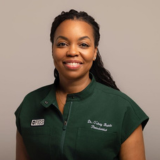
Whether you are looking to step out of your daily clinical "lane" to reconnect with the broader dental landscape or you are a candidate ready to translate years of experience into a prestigious recognition, the AGD2026 Fellowship Review Course provides the high-yield environment needed for that evolution.
In the following Q&A, Dr. Battle-Siatita discusses how shifting from simple memorization to a more deliberate, comprehensive diagnostic mindset fosters the grounded confidence that transforms both patient trust and professional identity.
How does this course help a specialist or focused practitioner regain the big picture mastery required of a Fellow?
One of the things I remind colleagues is that Fellowship isn’t about stepping away from your specialty, it’s about reconnecting with the full scope of dentistry. Over time, we all get very efficient in our lane. The challenge is that we don’t always revisit how everything else connects to what we do. This course helps bring that back into focus. It reinforces how restorative, periodontal, surgical, and medical considerations all influence one another in real patient care. That’s really the goal, not just remembering information, but seeing how it all fits together again.
What is the benefit of preparing in a room full of peers rather than studying alone?
There’s something valuable about learning alongside people who are working through the same process. In those settings, you hear how others approach clinical decisions, and that’s often where the deeper understanding comes from. It’s less about memorizing answers and more about refining how you think.
I also think it helps normalize the experience. Everyone has areas they haven’t revisited in a while. Being in a group setting makes that feel less like a gap and more like part of professional growth.
How should a dentist bridge the gap between clinical experience and exam rigor?
I usually tell people to start with what they’re already doing well and build from there.
You’re already treating patients every day. The difference is that the exam asks you to explain your reasoning more deliberately. So instead of separating studying from clinical work, try to connect them.
If you’re planning a case, take a few minutes to revisit the underlying principles. Review classifications, think through alternatives, and ask yourself why you’re choosing one approach over another. That’s where the real preparation happens.
How does achieving Fellowship change confidence or patient relationships?
What I’ve seen is a shift in how clinicians communicate. It’s not that they suddenly know everything, it’s that they’re more confident in how they explain what they already know. That clarity makes a difference. Patients can sense when you’re thoughtful and grounded in your recommendations.
Over time, that builds trust. And when patients trust you, everything else in the treatment process becomes more effective.
Why did you choose to become an instructor, and what is most rewarding?
I love teaching! Teaching has always been an important part of my career, especially working with residents and mentoring other clinicians. What I find most rewarding is watching someone work through a concept they’ve been unsure about and then seeing it come together. That moment changes how they approach patient care moving forward. For me, that’s the value of being here. It’s not just about helping someone pass an exam, it’s about helping them grow into a more confident and well-rounded clinician.
Leave a comment